
1 May, 2025Print
Dr. Martin Luther King’s Powerful Connection With The Hawaiian People Is Honored On “A Lei For Reverend King”
Released For Lei Day In Hawai’i (May 1), The New Original Comes From ʻpōpoloheno: Songs Of Resilience And Joy’ - A Compilation Celebrating The Stories Of People Of African Descent In Hawaiian History - Coming June 13: https://found.ee/dZK8lg
Producer Māhealani Uchiyama Will Dance To “Kamakakēhau,” A Song From The ‘Pōpoloheno’ Collection At Honolulu’s Hawaiʻi Theatre This Weekend, Sung By Four-Time Grammy Winner Kalani Pe’a (May 3): https://www.hawaiitheatre.com/events/kalani-pea-may-day-2025/
|
|
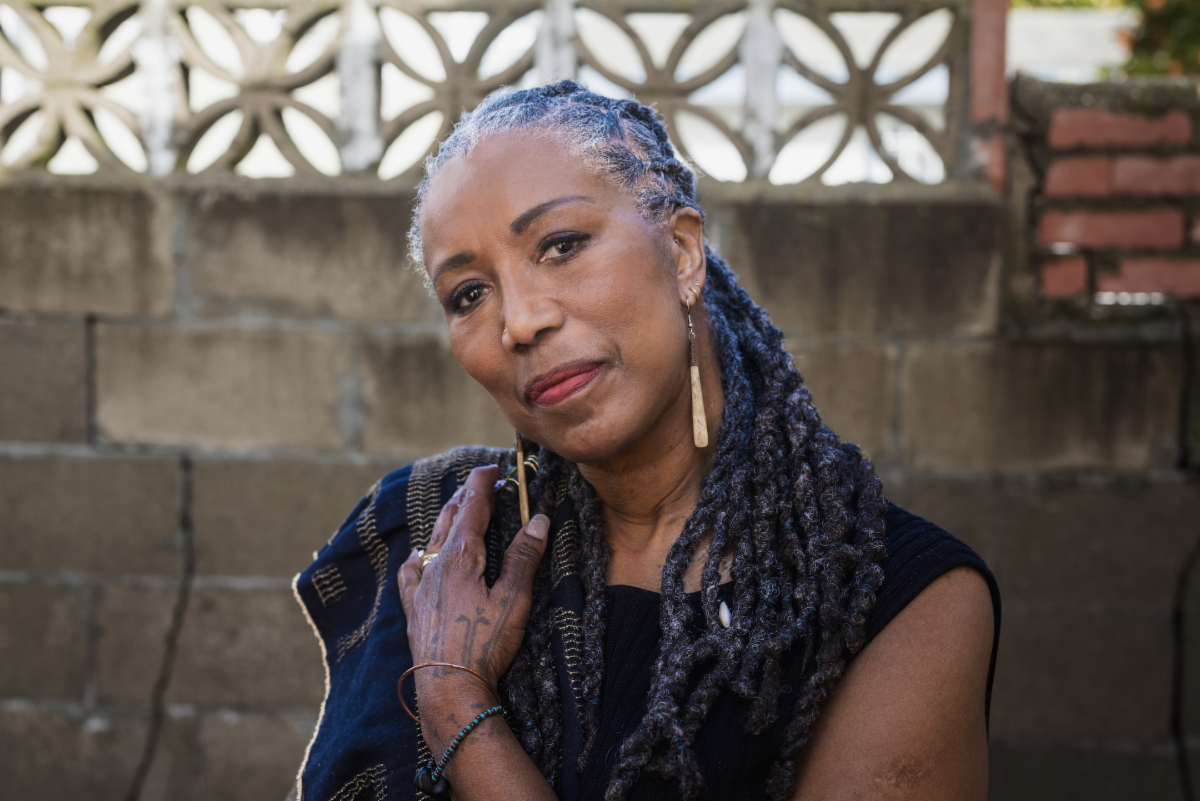
Photo credit: Jeremy Allen |
In the spring of 1965, Dr. Martin Luther King Jr. wore a Hawaiian lei as he marched from Selma to Montgomery - sent by the people of Hawaiʻi as a show of solidarity and support in the long struggle for Civil Rights through nonviolent resistance. Flipping through Ebony Magazine as a young girl, those images spoke powerfully to Māhealani Uchiyama - who would grow up to make history of her own, as the first lineally recognized Kumu Hula (Hula educator) of African descent. In her next trailblazing effort, Uchiyama has convened a diverse array of award-winning musicians from throughout Hawai’i - to celebrate the under-told stories and vast contributions of the islands’ Black community. That collection, ‘Pōpoloheno: Songs Of Resilience And Joy,’ arrives June 13.
In advance of the album’s release date, Uchiyama has shared “A Lei For Reverend King” - to honor the 60th anniversary of Dr. King’s March on Selma, and to celebrate Lei Day in Hawai’i (which takes place today, May 1). Within “A Lei For Reverend King” (which is sung in both English and Hawaiian), Uchiyama brings those formative and transcendent images of Dr. King to life. She also reflects on Dr. King’s 1959 address to the Hawaiian Legislature, in which he invoked the courageous words of Queen Liliʻuokalani - as her people battled injustice during the overthrow of the Hawaiian Kingdom in the 1890s: “don’t be afraid, beloved people, stand firm in pride.”
Listen to “A Lei For Reverend King” here: https://www.youtube.com/watch?v=n6WHEszD1G0
Pre-order ‘Pōpoloheno: Songs Of Resilience And Joy’ here: https://found.ee/dZK8lg
“When I first saw that iconic image of Reverend King wearing a lei during his March on Selma, I immediately connected to it - as a young child would,” says Uchiyama. “The Civil Rights movement was convulsing just outside of our Washington, D.C. neighborhood, but I was transfixed by those beautiful flower leis and wondered how amazing it would be to live in a place where people wore such things! While researching the history of this image for Pōpoloheno, I was intrigued to learn that King spoke at the Hawaiʻi State Legislature, which in 1959 was meeting in the Throne Room at ʻIolani Palace. I reflected on the words of Dr. King and also of the Queen of Hawaiʻi, Liliʻuokalani, who held court in that very room. They both spoke of inspiration and strength in times of great difficulty for their respective peoples. Kingʻs visit inspired the Hawaiian community to send the lei as a symbol of solidarity with him during the Selma march. The words of the Queen and the King still resonate for us today.”
‘Pōpoloheno’ was previously announced in February alongside a new song by four-time GRAMMY winner Kalani Pe’a called “Kamakakēhau”(a tribute to musician Kamakakēhau Fernandez, an African American who was adopted as a baby from Little Rock Arkansas into a Hawaiian family). Kalani Pe’a will perform the song and Māhealani Uchiyama will dance at Honolulu’s historic Hawaiʻi Theatre this Saturday, May 3, in honor of May Day.
Listen to “Kamakakēhau” here and for more information on the Hawaiʻi Theatre performance (as part of Kalani Pe’a’s 7th annual Lei Day concert) visit: https://www.hawaiitheatre.com/events/kalani-pea-may-day-2025/
While some songs on ‘Pōpoloheno’ highlight prominent figures - like “A Lei For Reverend King,” or the story of President Barack Obama’s upbringing in Hawai‘i - many more shine a light on those who remain too little-known. Those include Alice Ball - who developed the first treatment for leprosy before passing away at just 24 years old - and Betsey Stockton, a formerly enslaved woman who taught children of Lahaina how to read and write, becoming one of the first school teachers in Hawaiʻi.
Contributors to the album include many of Hawai‘i’s most beloved musicians, including "Kamakakēhau" by Pe’a, an original song from Kamakakēhau Fernandez himself, plus fellow Nā Hōkū Hanohano Award winner (presented by the Hawai’i Academy of Recording Arts) Patrick Landeza and nominee Kaulike Pescaia. Hawaiʻi’s “First Lady of Jazz” (and Nā Hōkū Hanohano Award winner) AzureMcCall and Kumu Hula (Hula Master) Kawika Alfiche also appear on ‘Pōpoloheno.’ The project was created by Māhealani Uchiyama alongside a team of advisers including Adam Keawe Manalo-Camp (Historian & Sociologist), Dr. Akiemi Glenn (Historical Consultant), Dr. Puakea Nogelmeier (Hawaiian Language Resource) and Dr. Kalei Nuʻuhiwa (Hawaiian Epistemology and Protocol Guidance).
‘Pōpoloheno’ Tracklist
1. Kamakakēhau
2. Ka Pua Mohala
3. A Lei For Reverend King
4. Pua Laulele
5. Wahine Hoʻola
6. Kumuniu Cumbia
7. He Mele Awaiaulu Nō Hawaiʻi Haʻaheo
8. Ka Momi Hiwahiwa
9. Māhealani
10. I Am Where I Belong