
Julian Kytasty announces release of 'Songs of Truth: Music and Song from the Kobzar Tradition of Ukraine'
Out August 1st on Smithsonian Folkways’ Sound Communities Recording Series
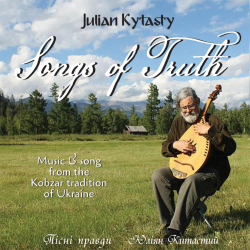
Pre-order the album HERE and listen to lead single "Song of Truth" HERE
On August 1, Smithsonian Folkways will release Songs of Truth: Music and Song from the Kobzar Tradition of Ukraine, an album by Julian Kytasty, a Ukrainian American musician celebrated around the world as a master of the bandura. This plucked-string instrument has become a symbol of Ukraine through its association with the deep tradition of the kobzari: blind bards who traveled throughout the Ukrainian countryside until the early 20th century, spreading news and sharing history through their sung stories accompanied on bandura. The singers were historically almost exclusively blind, in part to give those without sight a role of great social significance since other forms of labor were not available to them. Kytasty’s interpretation of the bandura brings expressive clarity and vibrancy to this centuries-old repertoire, skillfully recasting historical epics and sharing timeless philosophical songs, biting satire, and joyful dance tunes.
|
|
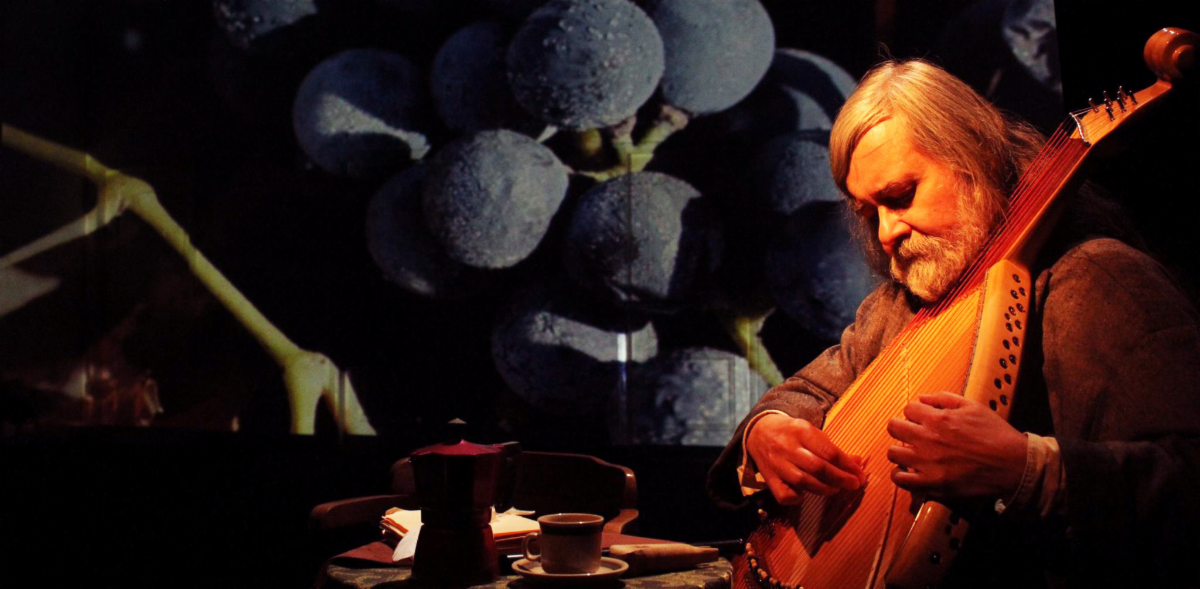
Julian Kytasty with the Yara Arts Group, 2013 - photo by Waldemart Klyuzko |
Kytasty was born into a Ukrainian family whose community had come to Detroit as refugees in 1949. He learned bandura from his father, grandfather, and great uncle, and later studied the kobzar repertoire and accompaniment style in Ukraine from Heorhiy Tkachenko, one of the most respected traditional bandurists of the mid-20th century and a direct link to the music of the blind kobzari. Captivated by this music, Kytasty sought out its echoes in recordings and the work of living players. On Songs of Truth, Kytasty adds his voice to this legacy of songs and stories.
As a performer, recording artist, composer, and band leader, Kytasty has redefined possibilities for the bandura for collaboration and experimentation. Serving as the musical director of the New York Bandura Ensemble, he also founded and curated ten years of Bandura Downtown, an innovative music series based in New York’s East Village that provided a home for creative explorations of traditional and contemporary sounds and themes. Traveling between Canada and the United States since the 1990s, he has recorded and performed as a soloist, with the Canadian world music group Paris to Kyiv, and in his own Experimental Bandura Trio. Kytasty’s passion and artistry have brought him to worldwide stages and studios with musical innovators such as John Zorn and Derek Bailey, as well as cross-culturally with such artists as Wu Man, klezmer revivalist Michael Alpert, Mongolian master musician Battuvshin, and Asim Kuzuluk, a master singer from Hatay, Türkiye. These experiences have shaped his approach to composition as a way of designing a musical space in which each individual voice and instrument can find room and inspiration to make its own contribution.
The title track of the album, “Про Правду (Song of Truth),” is at the heart of the kobzar tradition. The song likely originated in the late 17th century, a time of widespread turmoil and social upheaval in Ukraine. Kytasty’s arrangement draws on the transcription from the 19th century by Ostap Veresai who was arrested for singing the song in public after performing for the tsar’s family in St. Petersburg. As Kytasty reminds us with this song, “it can sometimes be hard to tell the difference between truth and falsehood, and sometimes, those with power try to convince us that a lie is actually the truth.”
From the lilting jaunt of “the Noblewoman” to the dancing “Savradym” to the solemn epic songs like “Captive’s Lament,” we hear in this album the range of the kobzar repertoire. Today’s precise, concert-style bandura performances have evolved from humbler beginnings—those of lone, blind, itinerant minstrels, who would play and sing as they made the rounds of their circuit of villages and market towns in 19th-century Eastern Ukraine. The blind kobzari maintained their practice in the rural areas of Eastern Ukraine until the 1930s. However, most of these original tradition bearers did not survive beyond that decade because of Stalinist repression, terror, and the government imposed, genocidal famine devastated that Ukraine. Though these artists are no longer with us, their music lives on in writing, recordings, and in the repertoires of their contemporaries who have passed the tradition on through mentorship and performance. During and after World War II, a few representatives of the urban bandura tradition escaped the Soviet Union extending its reach beyond Europe and into the Ukrainian diasporas of the United States, Canada, South America, Central Europe, and even Australia, with particularly active bandura communities settling in Detroit, New York, Toronto, and other major North American cities. The diaspora bandura tradition, from which Julian Kytasty’s performance stems, has continued to grow and flourish in the 21st century.
On Friday, Sep 26, Kytasty will be performing at the Joseph Strug Concert Hall, at the Fountain School of Performing Arts, Dalhousie University in Halifax at 7:30 pm.
Songs of Truth is the second release in the Sound Communities recording series, a collaboration between the Centre for Sound Communities at Cape Breton University and Smithsonian Folkways that highlights artists who tell stories of the lands, waters, and peoples of Turtle Island and focusing on the territories known as Canada.
About Smithsonian Folkways:
Smithsonian Folkways Recordings, the "National Museum of Sound," makes available close to 60,000 tracks in physical and digital format as the nonprofit record label of the Smithsonian, with a reach of 80 million people per year. A division of the Smithsonian Center for Folklife and Cultural Heritage, the non-profit label is dedicated to supporting cultural diversity and increased understanding among people through the documentation, preservation, production and dissemination of sound. Its mission is the legacy of Moses Asch, who founded Folkways Records in 1948 to document "people's music" from around the world. For more information about Smithsonian Folkways Recordings, visit folkways.si.edu
For more information on Smithsonian Folkways Recordings, follow:
Official website: folkways.si.edu
Facebook: facebook.com/smithsonianfolkwaysrecordings
Twitter: twitter.com/folkways
Instagram: instagram.com/smithsonianfolkways
|