
Will Generative AI Enhance or Stunt College Learning? Live Debate from Open to Debate and Johns Hopkins’ SNF Agora Institute
Rumman Chowdhury and Ravi Pendse debate Gary Marcus and Cathy O’Neil live at Johns Hopkins University Shriver Hall in Baltimore, Tuesday, Oct. 27
|
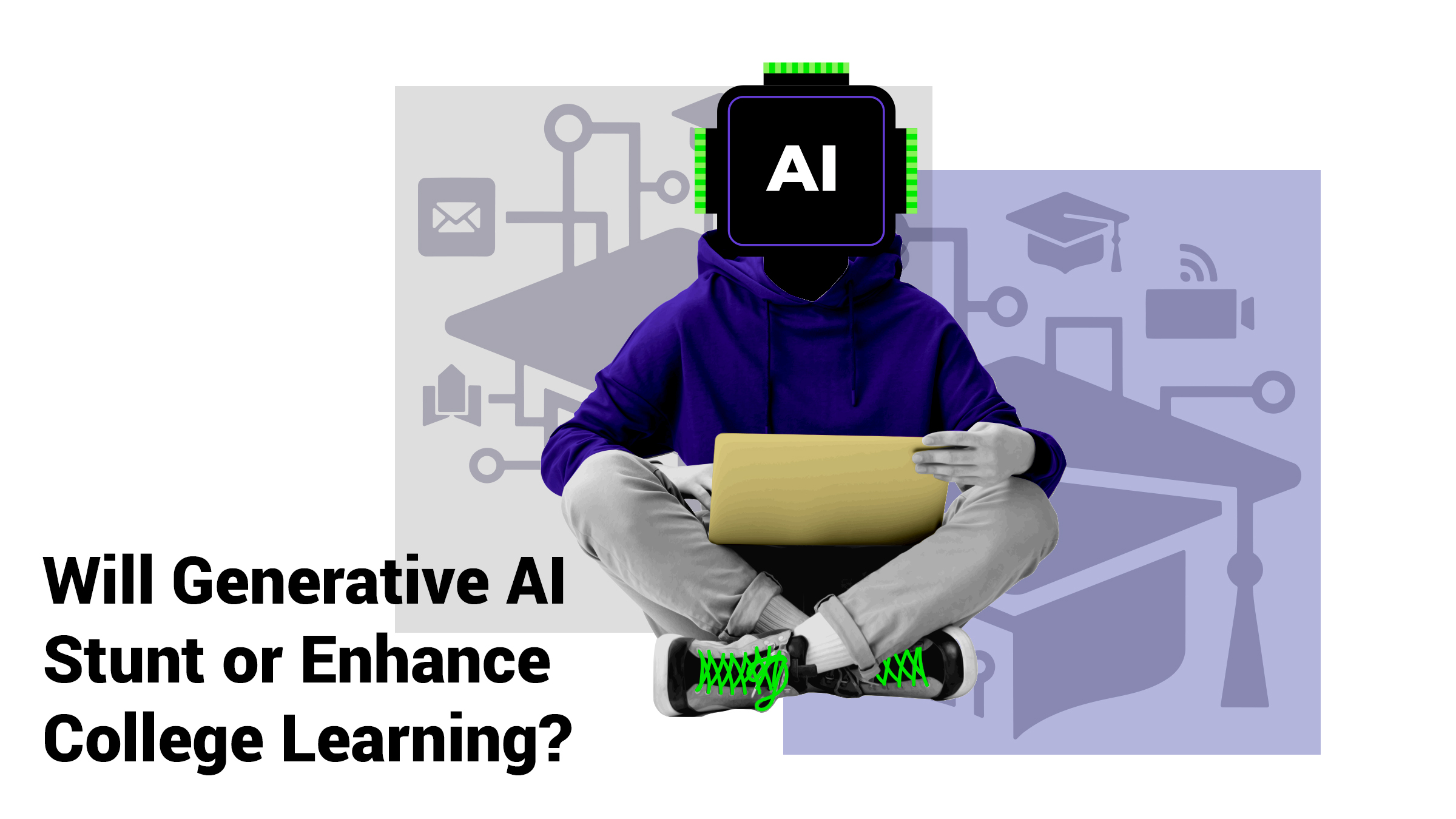
The final two debaters have just been announced for the debate “Will Generative AI Enhance or Stunt College Learning?” on Oct. 27 in Baltimore. Presented by Open to Debate and the Stavros Niarchos Foundation (SNF) Agora Institute at Johns Hopkins University, this Hopkins Forum debate will be part of the Johns Hopkins Data Science and AI Institute Fall 2026 Symposium: Artificial Intelligence and Human Learning. Arguing that generative AI will enhance student learning are data and social scientist Rumman Chowdhury, who was appointed by the Biden Administration as the first United States Science Envoy for Artificial Intelligence, and University of Michigan VP for Information Technology Ravi Pendse, who has helped lead higher education’s response to generative AI. Arguing that generative AI will stunt college learning are scientist Gary Marcus, a best-selling author and the founder of Geometric.AI, and mathematician and data scientist Cathy O'Neil, who wrote the New York Times best-seller Weapons of Math Destruction: How Big Data Increases Inequality and Threatens Democracy. The event is presented by Open to Debate and the Stavros Niarchos Foundation (SNF) Agora Institute at Johns Hopkins University and is the seventh debate in their ongoing partnership, The Hopkins Forum. It will take place on Tuesday, October 27, at 6 p.m. ET at Shriver Hall (3400 N. Charles Street) on Johns Hopkins University's Homewood campus in Baltimore. Media are invited to attend and can email raypadgett@shorefire.com for access. The event will be recorded for later broadcast on the Open to Debate public radio show and podcast. Launched in 2025, The Hopkins Forum has previously presented six live debates in both Washington, D.C. and Baltimore. In the first debate, Jeff Sessions, Jeff Flake, Cristina Rodriguez, and Jamal Greene debated the future of the Supreme Court. In the second, former Congressman and CIA officer Will Hurd and State Department veteran Susan Thornton debated the U.S.-China AI arms race. In the third, former CDC director Tom Frieden, influencer Doctor Mike Varshavski, former Surgeon General Jerome Adams, and emergency medicine physician Dara Kass debated whether COVID was a public health failure. The fourth saw tech policy experts debating the government breaking up Big Tech. The fifth saw Andrew Yang and Chris Hughes debate AI and the future of work. The sixth and most recent asked Is the Scientific Enterprise Too Risk-Averse? with Tyler Cowen and Kate the Chemist.
Rumman Chowdhury: CEO of Humane Intelligence PBC; Former U.S. Science Envoy for Artificial Intelligence She was appointed by the Biden Administration as the first United States Science Envoy for Artificial Intelligence. Dr. Chowdhury is also a Responsible AI Fellow at Harvard University’s Berkman Klein Center for Internet and Society. Previously, Dr. Chowdhury was the Director of the ML Ethics, Transparency, and Accountability (META) team at Twitter, as well as the Global Lead for Responsible AI at Accenture Applied Intelligence. She was named one of TIME's 100 most Influential People in AI, BBC’s 100 Women, Worthy Magazine's Top 100, recognized as one of the Bay Area’s top 40 under 40, and named by Forbes as one of "Five Who are Shaping AI." Chowdhury holds two undergraduate degrees from MIT, a master's degree in Quantitative Methods of the Social Sciences from Columbia University, and a doctorate in political science from the University of California, San Diego. Ravi Pendse: Vice President for Information Technology and Chief Information Officer at the University of Michigan Dr. Pendse has helped lead higher education’s response to generative AI. Under his leadership, Michigan became the first university in the world to provide a custom suite of generative AI tools broadly to its faculty, staff, and students, built around principles of privacy, equity, accessibility, and responsible use. He co-sponsored U-M’s first Generative AI Advisory Committee in 2023 and the university’s 2026 AI in Education Working Group, helping shape an approach that explores how AI can strengthen teaching and learning while preserving critical thinking and human judgment. A longtime professor, researcher, teacher, and student advisor, Dr. Pendse has secured more than $21 million in external research funding, earned several teaching awards, and published numerous scholarly articles with students. He advocates for human-centered AI based on a simple principle: technology should enhance human potential, not replace it.
Gary Marcus: Leading Voice on AI and Professor Emeritus at NYU; Author of "Marcus on AI" Substack Cathy O'Neil: Mathematician and Data Scientist
SNF Agora organizes its work around three pillars:
Through its work, the SNF Agora Institute empowers citizens with diverse backgrounds, perspectives, and ideas to participate meaningfully in civic life. Its scholars and practitioners collaborate to address challenges to democracy, bridge divides, and cultivate democratic resilience through research, innovative interventions, and public engagement. For more information about the SNF Agora Institute, visit www.snfagora.jhu.edu. ### |
For more information on Open to Debate, please contact Ray Padgett (raypadgett@shorefire.com) at Shore Fire Media.