
Ezra Collective
Click  on photo to download high resolution version
All rights reserved. Photos are for editorial use only.
Photos
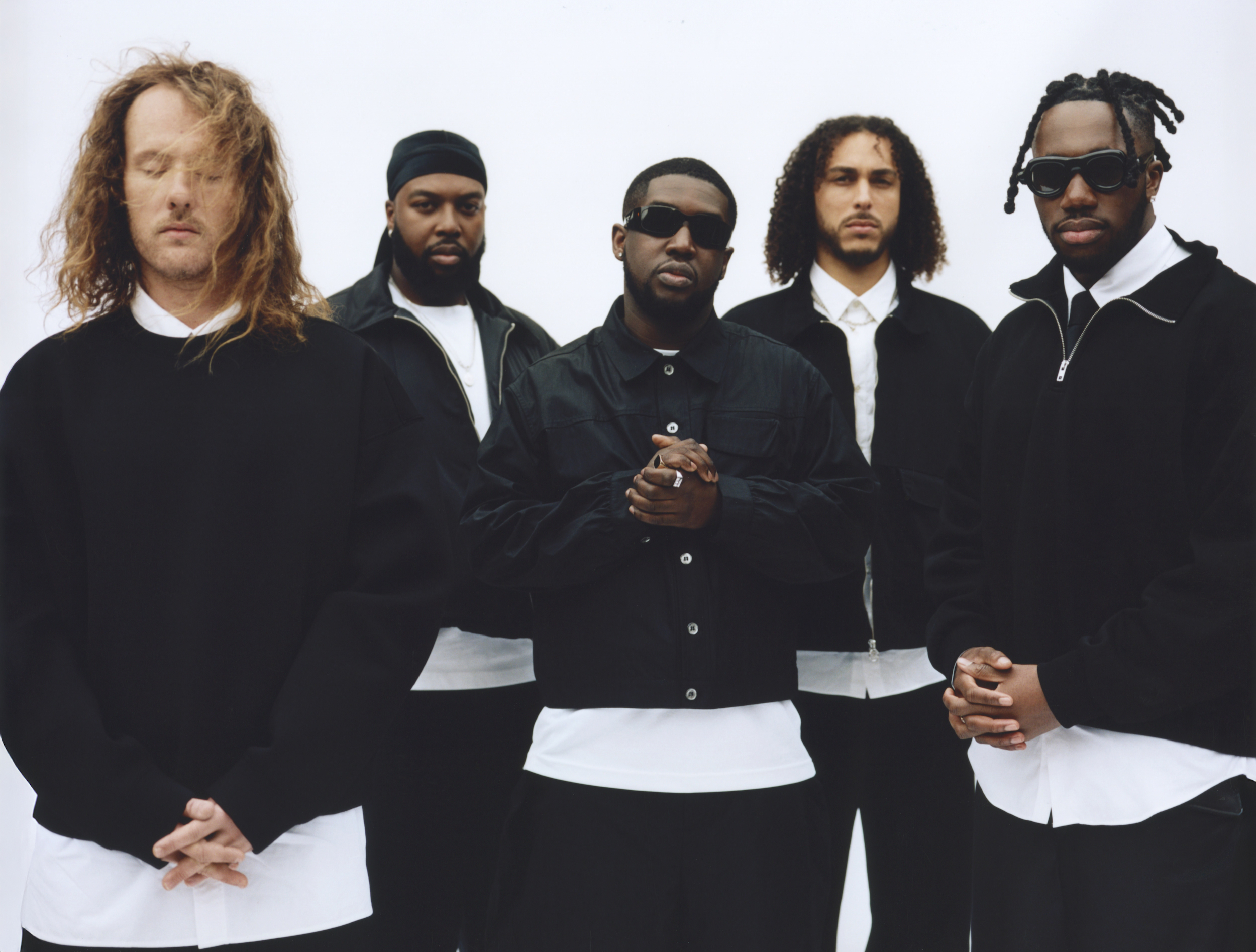
PC: Sergio Pontier
.jpg)
PC: Sergio Pontier
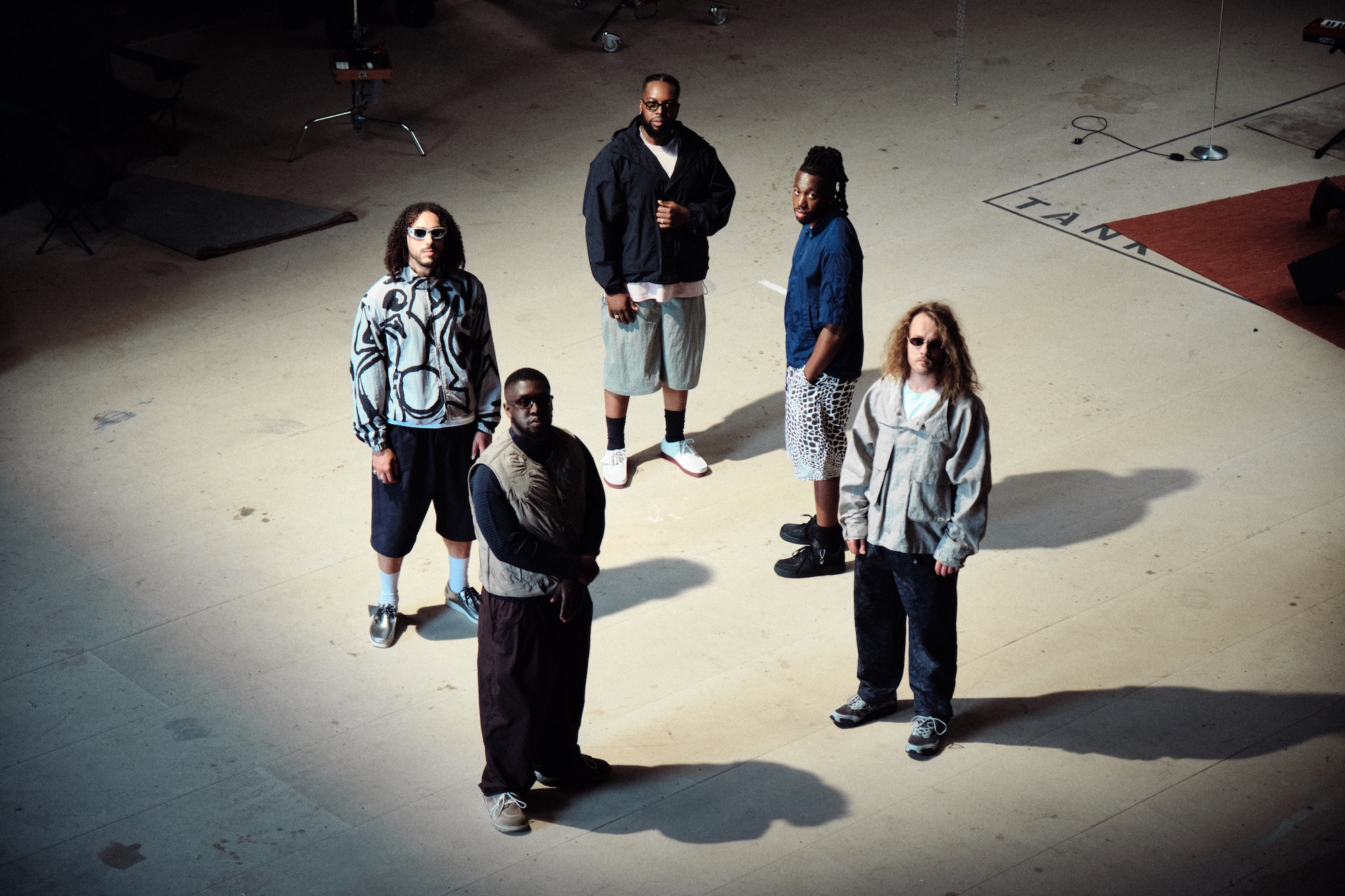
PC: Aliyah Otchere
Latest ReleaseView All
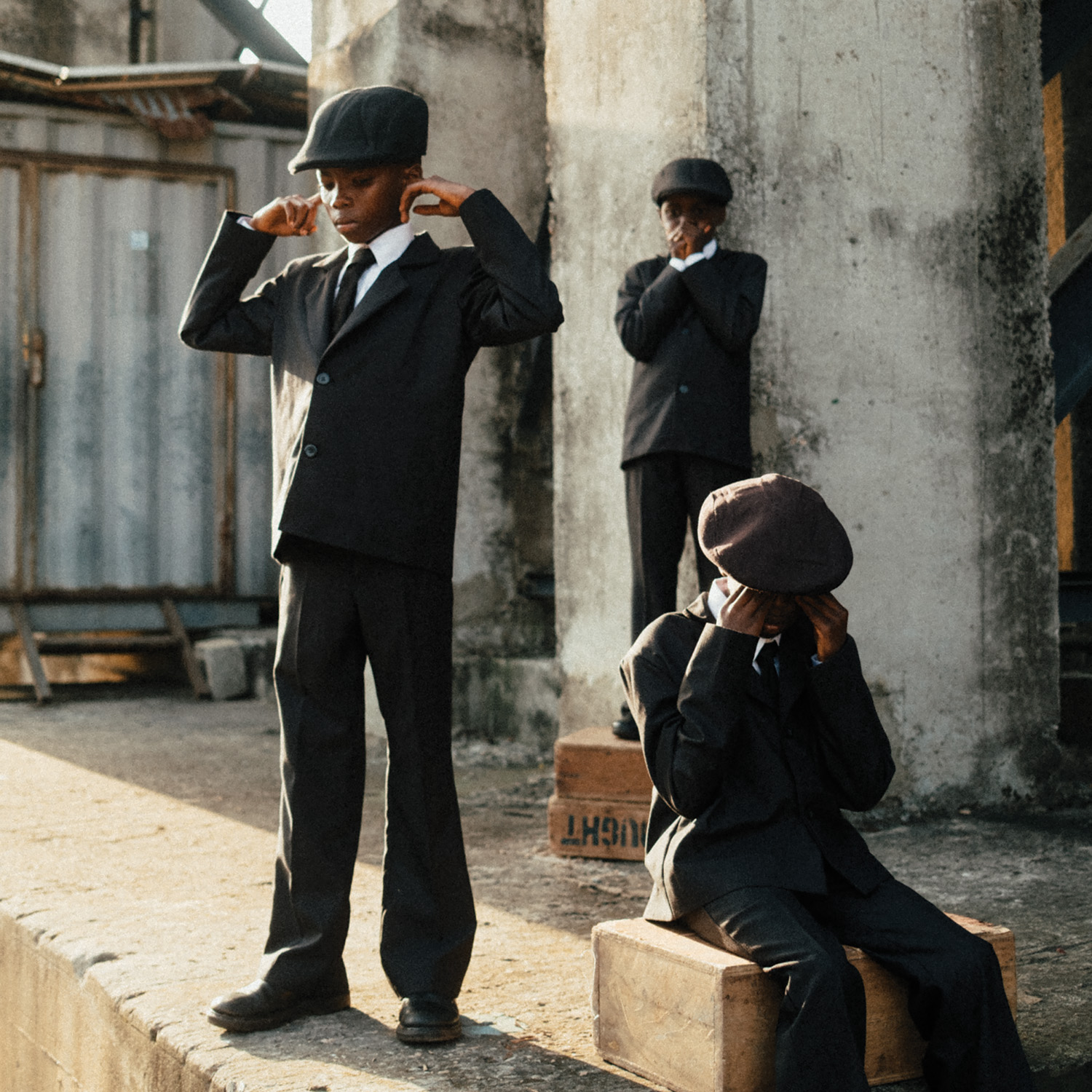
Here Because of Hope
Release date: 9.11.26
Label: Partisan Records
Press Releases View All
The “Unstoppable Ezra Collective” (Pitchfork) Release New Album Here Because Of Hope Today
Read MoreEzra Collective Share New Single + Video “Well Organised” Feat. Lila Iké
Read MoreEzra Collective Announce North American Tour Dates
Read MoreBiography View
Few bands in British music carry the weight of community, culture and craft quite like Ezra Collective. Formed in the youth clubs of London and shaped by the rich musical life of the capital's churches, clubs and streets, they’re a band whose story has always been inseparable from the environments that made them. Femi Koleoso on drums, TJ Koleoso on bass, Joe Armon-Jones on keys, James Mollison on saxophone and Ife Ogunjobi on trumpet — five musicians who grew up together, aged together, and have over a decade documenting that shared life in sound.
Their journey from their formation in 2012 and first EP Chapter 7 in 2016 to the present day is one of the most compelling ascents in contemporary British music. Rooted in jazz but never confined by it, Ezra Collective became a living argument that jazz could be joyful, urgent and entirely relevant — as much at home in a sweaty basement as on a festival main stage.
Off the back of their phenomenal 2022 album Where I’m Meant To Be - which scooped the 2023 Mercury Prize - their 2024 project Dance, No One's Watching crystallised everything the band had been building towards. A record so full of life and abandon that it crossed every genre boundary in its path. The results were staggering. Dance, No One's Watching reached number seven in the UK albums chart, and took them all the way to Wembley Arena and the BRIT Awards, where they won Group of the Year in 2025. For a jazz band, the achievement was unprecedented.
Ezra Collective has always been driven not by the desire to prove something to the outside world, but by something more personal and more urgent — the act of bearing witness to their own lives as they are lived. "I think this new chapter is the beginning of the documentation of us as adults," TJ reflects, "as opposed to young kids."
The band’s forthcoming new album Here Because Of Hope arrives not as a sequel to Dance, No One's Watching but as something altogether more expansive. Conceived as a body of work split into three spiritual and geographical movements, the album traces the movement of Black people across continents and decades, from the music of West Africa to the rhythms of the Caribbean, and home to the streets of the United Kingdom. It is the band's most conceptually ambitious record to date, and also their most personal.
The seed of the album was planted in the band’s imagination long before a note was recorded. They had been obsessing over a simple, profound question: why does so much Black music born out of pain sound so joyful? From Fela Kuti's afrobeat — written as a soundtrack to civil war — to the calypso born out of the slave trade, to grime emerging from the poverty of East London, the pattern was everywhere. The music said something that defied its origins. "We started thinking and obsessing about how many Black genres where the story is painful, but the result is this dance floor feeling,” Femi explains. “And we came up with hope. It's the hope that one day this pain will change and take me to that place. So we’re going to write in anticipation of that place."
That conceptual thread — pain, hope, joy — became the architecture of Here Because Of Hope. Each movement is devoted to a different geography and its sonic heritage: West Africa, the Caribbean, and the United Kingdom. It is not an abstract exercise. “We understand where this music comes from,” says Ife. “We explore these sounds but we’re all linked by London, which in itself is a feeling and a culture. This album represents that melting pot of creeds and colours that we all grew up observing and loving.” Joe doubles down, illuminating the full circle moment that Here Because of Hope represents. “The music [on the album] is already the makeup of jazz in the first place,” he says. “That combination of those different sounds from those different areas of the world. So it kind of comes back around.” This is the actual story of the Koleoso brothers' family — Nigerian parents who made the journey to London — and of the band's Caribbean-rooted members, and of what it means to grow up at the intersection of all these worlds in the UK capital.
TJ frames the concept with equal passion, drawing the through-line from history to the present day: "When you look at that reality and think about what hope is, you realise there's two things in the human experience that every single person gets: pain and hope. Regardless of size or shape, every single person understands pain. And if you understand pain, inadvertently you understand hope, because you decided to push through."
The album was recorded largely in a week-long residential session at Miraval in the south of France — a sprawling vineyard studio where the band could exist, as James puts it, "away from any distractions, just making music." It was a creative environment built on togetherness. "We kind of created a living room that was family friendly,” Femi says. “The steel pans are played by a youth club. I went to hang out with them and watched their rehearsals. These little moments — it's the sound of community.”
The album opens in the West African movement with ‘Part 1,’ a scene-setting monologue read by BAFTA Award-winning actress Letitia Wright that establishes the tone — purposeful, atmospheric and alive with expectation. The skits on the album — spoken word passages that serve as bridges between the movements — were performed by Wright, an artist Femi describes as "the embodiment of this story in so many ways, going through a lot of pain personally, but then bringing so much joy with the way she acts and performs."
‘Part 1’ gives way to ‘Blow Your Trumpet,’ a track built on deep grooves, its rhythm doing precisely what the title demands: cutting through, announcing presence. ‘Sweet Echo’ brings a different shade of the African continent into view, its highlife influences giving the track a shimmer that speaks to the golden age of Ghanaian guitar music. Joe acknowledges that highlife was perhaps the genre that required the most conscious study. "The hardest aspects [of the record] was some of the highlife stuff that we don't play as much," he admits. But the track wears its learning lightly, settling into the idiom with natural warmth.
‘Don't Worry’ floats somewhere between the earthly and the celestial. Designed to sound like heaven — an impression of stillness and grace that stops time — it is one of the album's most quietly affecting moments, a reminder that Ezra Collective can be as devastating in restraint as they are in full flight.
‘Only Love’ features Pa Salieu, a collaboration that the band pursued with specific intent. They wanted the African movement of the album to represent a breadth of the continent — not just the West African sounds that the band already carried naturally, but something rarer, something distinct in its deepest grain. "We wanted an African rapper who wasn't Nigerian or Ghanaian,” Femi says. “We really wanted a different sound to Africa. One that is distinctly African, but underrepresented. We wanted to make sure it was there."
If the West African movement is about origin, the Caribbean movement is about journey — the passage of people and culture across the Atlantic, and the new forms that emerged from that movement. ‘Well Organised’ is built around an interpolation of reggae legend Max Romeo’s ‘I Chase The Devil’ by Jamaican singer Lila Iké, its roots deep in the soil of the nation’s sound system culture. ‘El Corazón’ brings the full heat of salsa to the record, its rhythms unmistakably shaped by the Latin Caribbean — conga patterns, brass stabs, the irresistible pull of the clave. For TJ, the salsa influence was one of the album's most important creative statements. "I don't think the country understands salsa that much,” he says. “We wanted to show that a song like that can be a real thing — that it can mean something beyond novelty."
James reflects on how naturally all of these Caribbean sounds sit within the band's palette: "We all listen to reggae. We listen to funky house, grime, UK hip-hop. These are all genres that are synonymous with all these different places. In terms of making the music, it was very natural, because it's kind of who we are anyway." ‘Bunny on the Rise’ closes the Caribbean movement — a track that feels like it has always existed, rooted and buoyant at once.
The instrumentation across the album was something the band thought about with great care, insisting on the right percussion for each tradition: steel pans, congas, the ágogô bell, the wood block — the specific, irreplaceable instruments that make each culture's music sound like itself. "We wanted to make sure the instruments represented those parts of the world," James says.
The final movement of Here Because Of Hope is the one closest to the band's daily reality: the United Kingdom. Specifically London, the city that shaped them. That took all of these sounds from all of these places and became a crucible for something entirely new. ‘All I Need’ features Leona Lewis and arrives as the movement’s emotional centrepiece.
"Leona means more to young Black people in this country — or people our age — than I think we first clocked,” TJ proclaims. “When she did ‘All I Need,’ and whenever the homies find out it's her on the record, they have this weird flashback to her winning The X Factor!" It is the kind of guest appearance that transcends the album itself — a collision of two beloved British success stories, each the product of their own hope and perseverance. ‘Jubilee Feeling’ and ‘Black Flag’ follow — the latter, Femi notes, was completed in a single take. The spontaneity suits the song, which carries something raw and unguarded in its directness.
The album closes with ‘Most High’ featuring Libianca — a song that builds from intimate confession to something euphoric and triumphant. Libianca's lyrics speak of a private faith, a God present in the quiet moments of despair rather than only in public miracle. “It's the most hopeful ending of an album I think ever,” Femi declares. “It goes into this sonically euphoric and triumphant place.”
Here Because Of Hope is a record about migration, but it is equally a record about faith. Not necessarily faith in the narrow religious sense, but in the broader human sense of believing that something better is possible. "At the core of the band, it's all about inclusivity,” Ife says. “That's something we've always been about. It's important to relate hope to everyone. You can have those dreams and aspirations for the future."
Here Because Of Hope is not an album that arrived because the band needed to capitalise on the success of Dance, No One's Watching. It arrived because they had something new to say, and because the music demanded to be made. "There's always a story to tell," Femi says simply. "Tomorrow is not promised."
What makes the record remarkable is not merely its ambition — though that is considerable — but its warmth. Every track sounds like it was made by people who love each other and love the music they’re playing. The West African movement reaches back to the roots; the Caribbean movement traces the diaspora's journey; the UK movement lands in the place these five musicians call home. Together, they form a complete picture of where Ezra Collective came from and who they are. And while the album anchors itself in those three specific geographies, its themes reach across the full breadth of the global African diaspora - not least of all America, where those same African and Caribbean roots gave birth to jazz itself. "The album is the photograph,” TJ says. “You might be like, why are we going into this? Or why are we speaking about that? Because it's happening, and it might not happen tomorrow. So make a photograph of it."
Fourteen years in, Ezra Collective are still taking photographs. Still documenting. Still hoping. And on Here Because Of Hope, that hope sounds more like a certainty than ever.